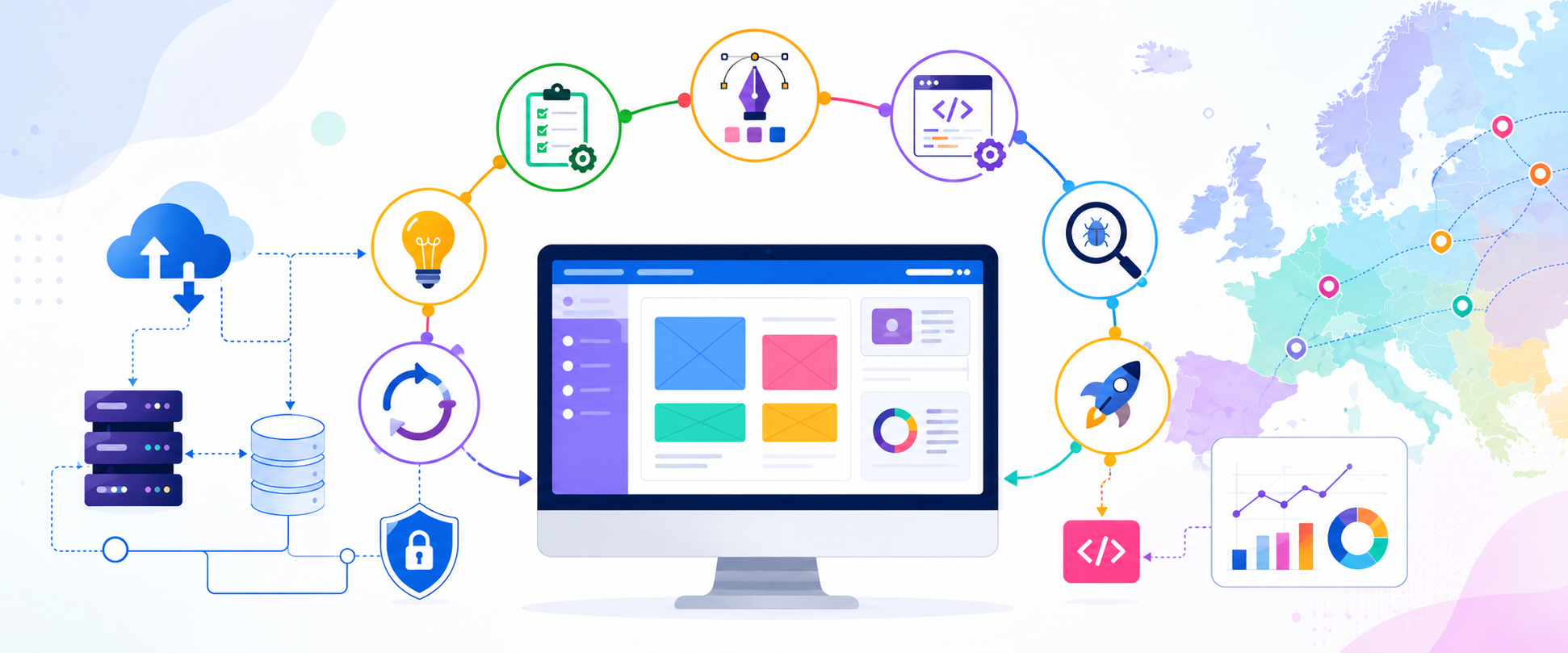
Building a successful digital product is rarely about having a great idea. The real challenge begins when businesses try to transform that idea into something customers actually want to use.
Many organizations have innovative concepts but struggle with product planning, development timelines, technology selection, scalability, and post-launch improvements. A product that performs well during launch can quickly become outdated if it isn't built with long-term growth in mind.
This is where End-to-End Product Development Services have become invaluable for businesses across Europe.
Why Businesses in Europe Are Investing in End-to-End Product Development Services
European businesses are increasingly investing in End-to-End Product Development Services because modern product development requires much more than coding. Companies are looking for strategic partners that can help them transform ideas into market-ready digital products while maintaining quality, scalability, and speed throughout the development lifecycle.
As customer expectations continue to evolve, businesses need products that are adaptable, user-friendly, and capable of supporting future growth. End-to-end development services provide a structured approach that helps organizations reduce operational complexity and improve collaboration across teams. Instead of managing multiple vendors, businesses benefit from a unified development process that improves efficiency and accelerates innovation.
For organizations operating in competitive European markets, investing in a complete product development solution often leads to better project visibility, faster delivery timelines, and stronger long-term business outcomes.
How End-to-End Product Development Services Improve Business Efficiency
Business efficiency is often directly linked to how effectively teams, technologies, and processes work together. End-to-End Product Development Services simplify this process by centralizing product planning, development, testing, and support within a single development framework.
By streamlining product development activities, organizations can dedicate more time to innovation, customer engagement, and business growth while maintaining confidence in the technical foundation of their digital products.
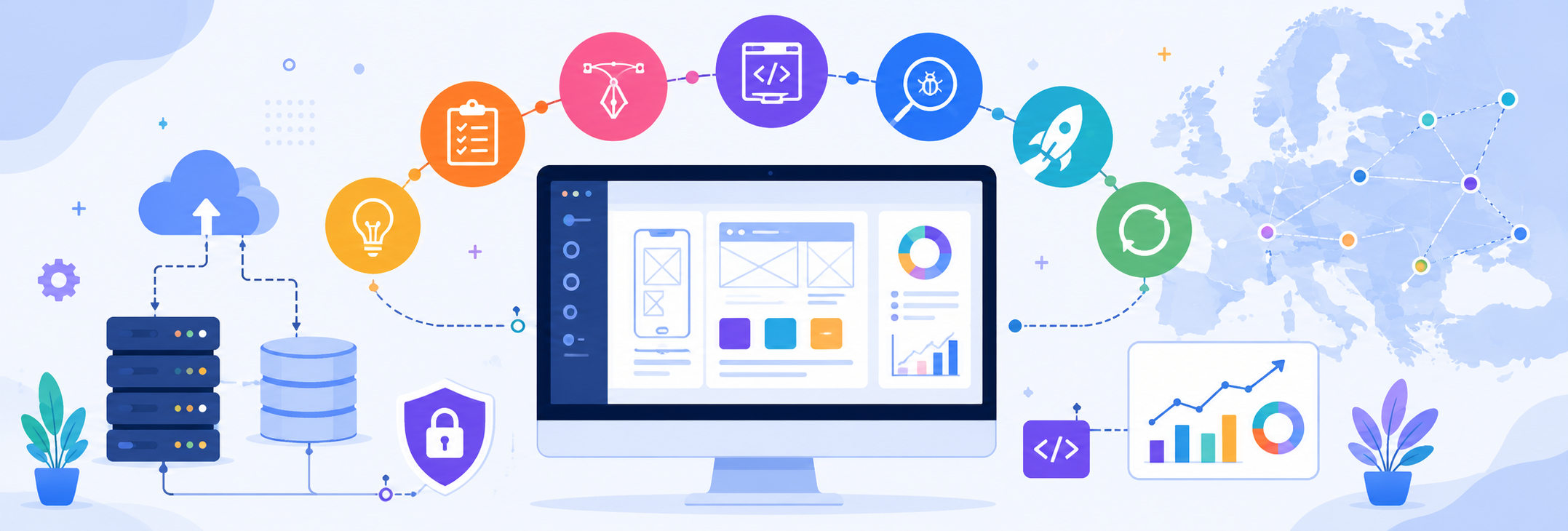
The Complete Product Development Lifecycle Explained
1. Product Discovery & Idea Validation
Every successful product starts by answering one important question: Does the market actually need it?
During the discovery phase, businesses define:
- Target audience
- Business goals
- Market opportunities
- Competitive positioning
- Core product requirements
Validating ideas early can significantly reduce unnecessary development costs.
2. Product Strategy & Planning
Once the idea has been validated, product teams develop a strategic roadmap that outlines features, timelines, technology choices, and scalability plans.
Proper planning minimizes development bottlenecks later in the project.
3. UI/UX Design
Design plays a critical role in product adoption. Users rarely care how sophisticated the backend architecture is if the interface feels confusing or frustrating.
Good design focuses on:
- User experience
- Accessibility
- Responsive layouts
- Customer journeys
- Product usability
4. Product Development
This phase involves turning approved designs and specifications into a working product.
Development teams typically focus on:
- Frontend development
- Backend architecture
- API integrations
- Database management
- Security implementation
5. Testing & Quality Assurance
Quality assurance ensures that products perform reliably across devices, browsers, and user scenarios.
Testing typically includes:
- Functional testing
- Performance testing
- Security testing
- Usability testing
- Compatibility testing
6. Deployment & Launch
Product deployment involves configuring environments, launching applications, and monitoring system performance during rollout.
7. Post-Launch Support & Optimization
Launching a product is not the finish line—it's the beginning of continuous improvement and innovation. Successful digital products continuously evolve based on customer feedback, business objectives, and technological advancements.
Key Features of End-to-End Product Development Services
- Custom Product Development
- Scalable System Architecture
- Agile Development Methodologies
- API & Third-Party Integrations
- Security-First Development Practices
- Cloud Infrastructure Support
- Cross-Platform Compatibility
- Continuous Maintenance & Updates
Modern product development is no longer limited to writing code; it involves building complete digital ecosystems that support future business growth.
How End-to-End Product Development Services Improve Business Efficiency
One of the biggest advantages of working with a dedicated product development partner is operational efficiency.
Businesses benefit from:
- Streamlined development processes
- Reduced communication delays
- Centralized project management
- Improved resource allocation
- Faster product delivery cycles
- Better collaboration across departments
Instead of coordinating multiple vendors, businesses can focus on product strategy and market growth while technical teams manage execution.
Organizations pursuing digital innovation initiatives often combine product engineering services with broader custom software development solutions to accelerate digital transformation efforts.
Why Scalability Matters in Modern Product Development
Many products perform well during initial launches but struggle as user demand increases.
Scalability should never be treated as an afterthought.
A scalable product architecture allows businesses to:
- Handle growing user traffic
- Support new feature releases
- Integrate with emerging technologies
- Expand into new markets
- Reduce redevelopment costs
Building for today's requirements is important, but building for tomorrow's opportunities is even more valuable.
How to Choose the Right Product Development Partner in Europe
Choosing the right development partner can significantly impact project success.
Businesses should evaluate:
- Technical expertise and development capabilities
- Industry experience
- Agile development processes
- Communication transparency
- Post-launch support services
- Scalability and security practices
An experienced development partner should understand both technology and business objectives.
You can learn more about modern product engineering approaches by exploring this detailed guide on End-to-End Product Development Services in Europe.
The Future of Product Development in Europe
Digital product development continues to evolve rapidly across Europe. Businesses are increasingly investing in technologies that improve automation, customer experiences, and operational efficiency.
Some emerging trends include:
- AI-powered products
- Cloud-native applications
- Low-code and no-code integrations
- Data-driven product strategies
- Intelligent automation solutions
- Scalable SaaS platforms
Organizations that adopt modern product development strategies today are better positioned to adapt to future technological changes and customer expectations.
Final Thoughts
End-to-End Product Development Services provide businesses in Europe with the expertise and technical capabilities required to transform ideas into high-performing digital products.
Whether you're building a new platform, modernizing an existing product, or planning your next digital initiative, investing in the right development strategy can significantly improve business outcomes.
Ready to build scalable digital products? Get in touch with our experts today and turn your ideas into market-ready digital solutions.